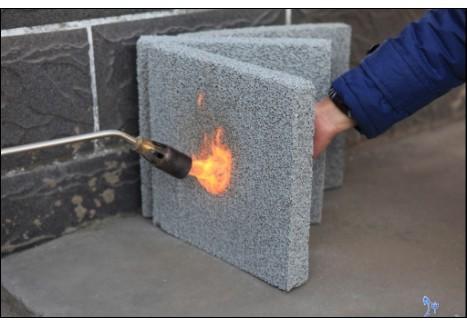
Foam Cement Fireproof Boards
Product Details
Solution Details
Dwell Foamed Insulation Panel – Product Introduction
Since 2010, our company has been one of the first in China to engage in the R&D and production of fireproof insulation panel equipment and technology. Through continuous technological updates and improvements, the Dwell A1-grade foamed concrete fireproof insulation panel, produced using our self-developed equipment and technical formulas, uses ordinary Portland cement and fly ash as its main raw materials. This results in low cost, with strength 1 to 2 times higher than that of foamed concrete of the same density grade. The foam cells are round, dense, and highly uniform, and the material is non-absorbent and impermeable. This technology holds a leading position in the national foamed concrete industry.
III. Ten Key Advantages
Eco-friendly, non-irritating, and no release of harmful gases
No harm to human skin or respiratory tract from mineral wool floaters. Smoke toxicity is rated as Safety Class AQ1. No emission of harmful gases or waste during production, construction, or installation. Low carbon emissions. No environmental pollution from waste generated by repeated removal of old insulation.
Fully inorganic, fireproof and non-combustible
The Dwell A1-grade fireproof insulation panel can withstand temperatures above 1,000°C. Its combustion performance is rated A1 (non-combustible material). Excellent fire safety performance. Fire resistance limit exceeds 2.5 hours, and the panel maintains integrity after fire exposure. It does not pulverize after fire and retains good structural integrity.
High thermal insulation performance
Closed-cell ratio >95%. The high closed-cell ratio significantly reduces air convection heat transfer. Thermal conductivity can be as low as 0.045 W/(m·K), comparable to that of expanded polystyrene (EPS) panels, meeting the requirements for building thermal insulation.
Low water absorption
Low water absorption ensures that the system does not mold or degrade in humid environments, does not compromise insulation performance, and guarantees system safety and durability.
Lightweight with high strength
The Dwell A1-grade fireproof insulation panel resolves the technical contradiction between low density and high strength, achieving a relative balance. At a density of 180 kg/m³, the compressive strength can reach above 0.4 MPa, meeting strength requirements for transportation and engineering applications.
Long service life and aging resistance
The service life of typical organic insulation panel systems is about 15 years, after which buildings require 3–5 re-insulation applications. The service life of the Dwell A1-grade fireproof insulation panel exceeds 50 years, matching the lifespan of the building. The building requires only one insulation installation in its lifetime.
Freeze-thaw resistance
The Dwell A1-grade fireproof insulation panel is a new cement-based composite material developed by the building materials division , based on improved foamed cement. After 15 consecutive freeze-thaw cycles, the mass loss rate is <5%, and the strength loss rate is <20%. This ensures the panel maintains stable physical and chemical properties under complex weather conditions.
Good sound insulation
The internal structure contains a large number of independent bubbles, providing sound absorption capacity 5–7 times that of ordinary concrete. Sound insulation reaches 60 dB (at 140 mm thickness), making it a new type of sound-absorbing and insulating foamed cement material.
Excellent workability
The Dwell A1-grade fireproof insulation panel is a cement-based porous material with the same properties as mortar and wall surfaces, offering excellent interfacial bonding. Simple surface cleaning allows for direct adhesion, which is strong and reliable.
Low cost
Several key performance indicators, application results, and energy efficiency indices of the Dwell A1-grade fireproof insulation panel are superior to similar products. With a service life exceeding 50 years, it eliminates the need for repeated organic material insulation construction on exterior walls during the building's service life, reducing overall building insulation costs by a factor of 3–5.
IV. Product Performance Specifications
| Parameter | Value |
|---|---|
| Dry surface density (kg/m³) | 100–260 |
| Compressive strength (MPa) | 0.35–0.65 |
| Thermal conductivity (dry state) (W/(m·K)) | 0.045–0.070 |
| Volumetric water absorption (%) | ≤10% |
| Drying shrinkage (mm/m) | ≤0.80 |
| Carbonation coefficient | ≥0.80 |
| Softening coefficient | ≥0.80 |
| Combustion performance | A1-grade non-combustible |