Foam Concrete Block Plant
Product Details
Solution Details
Project Advantages
1. Foam concrete is produced by extensively utilizing industrial waste materials such as fly ash, slag, stone powder, and sand as raw materials.
It is a new type of building material with waste utilization, environmental protection, energy saving and low cost for thermal insulation.
2. Foam concrete blocks exhibit comparable appearance quality, internal pore structure, and performance characteristics to autoclaved aerated concrete blocks.
However, the internal pores of foam concrete blocks are not interconnected, whereas those of autoclaved aerated blocks are interconnected. Consequently, foam concrete blocks exhibit superior thermal insulation and soundproofing performance with lower water permeability compared to autoclaved aerated blocks.
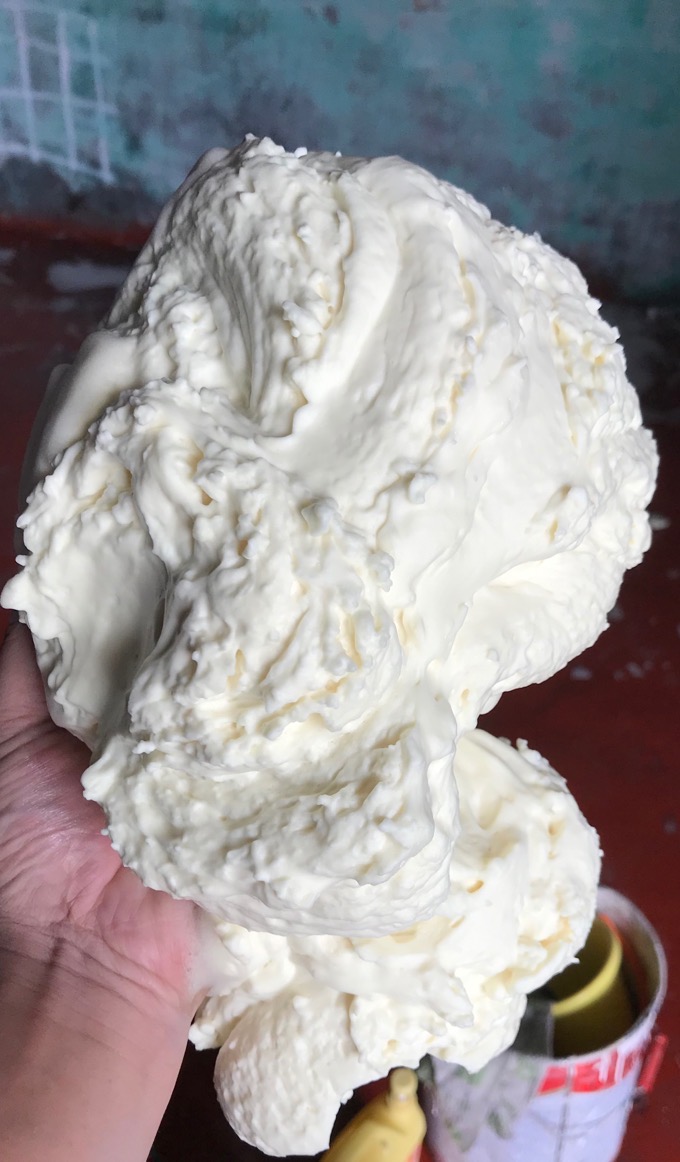
3. The production of autoclaved aerated concrete blocks involves internal addition of foaming agents (aluminum powder) that release gases through chemical reactions to form foam. In contrast, foam concrete blocks are manufactured by physically generating foam using a foaming machine, followed by mixing the bubbles into cement slurry. Autoclaved aerated concrete blocks undergo steam-curing processes, while foam concrete blocks are cured at ambient temperature or through dry heat curing.
In summary, foam concrete blocks and autoclaved aerated concrete blocks share nearly identical appearances, internal structures, and technical properties. The primary differences lie in their foaming processes, manufacturing methods, and curing techniques.
Compared with similar products, this product (project) possesses the following market competitive advantages:
(1) Small investment with flexible scale.
Foam concrete blocks require minimal production conditions, involve low investment, and do not necessitate large land areas; in contrast, aerated bricks demand an investment of at least tens of millions before commencing production and occupy substantial land space.
(2) Rapid efficacy with performance and cost advantages.
The investment cost can be recovered within one year.
(3) Utilizing local materials and promoting waste recycling for environmental protection.
The raw materials for foam concrete blocks are widely available and can be sourced locally based on regional conditions. Industrial waste such as cement, fly ash, slag, stone powder, sand, blast furnace slag, tailings sand, aerated crushed slag, and construction waste can be utilized as raw materials, effectively repurposing waste resources to meet the national building energy efficiency requirement of 65%.
(4) Flexible production methods with ease of implementation.
Using a single production line, multiple specifications of foam concrete products can be manufactured by simply adjusting the mold or cutting tool dimensions.
(5) Lightweight.
Currently, the bulk density of similar products on the market mostly ranges from 500 to 900 kg/m³. Products below 500 kg/m³ are difficult to produce, and those below 300 kg/m³ are virtually unavailable on the market. In contrast, foam concrete can produce ultra-low density blocks with a density of 200–300 kg/m³ (primarily used for non-load-bearing soundproof walls, theater acoustic walls, and building insulation components).
With a dry bulk density ranging from 300 kg/m³ to 1500 kg/m³, it is equivalent to 1/8 to 1/2 of conventional concrete or masonry blocks, significantly reducing the overall structural load on buildings.
(6) Excellent sound insulation and thermal insulation performance.
The 24cm-thick masonry blocks provide 58dB sound insulation, meeting the thermal and acoustic requirements for building exterior walls and partition walls.
Its thermal conductivity ranges from 0.06 to 0.27 W/(m·K).
(7) Excellent seismic resistance.
Foam concrete blocks, being multi-microcellular materials with low elastic modulus, exhibit excellent vibration and impact load absorption and dispersion capabilities. Their lightweight nature further effectively reduces structural loads, thereby enhancing seismic resistance—the lower the building load, the stronger its earthquake resistance.
(8) No cracking, long service life.
Foam concrete blocks exhibit no cracking or hollowing phenomena, requiring no surface primer application during use. They demonstrate outstanding aging resistance and typically share the same service life as the building itself.
(9) Excellent water resistance.
The water absorption rate of foam concrete blocks is below 10%, which significantly distinguishes them from other wall materials.
Therefore, it boasts advantages such as lightweight, environmental friendliness, energy efficiency, thermal insulation, soundproofing, fire resistance, and low water absorption rate. It is currently one of the most promising new building wall materials in the construction materials industry, serving as a novel alternative to traditional masonry bricks like clay bricks, hollow bricks, and non-fired bricks, with highly promising development prospects.
Related Equipment